By the time I get to dance class, my feet have already lived a full day. They have carried me through work, commuting, errands, family responsibilities, and everything else that had to be handled before the music started.
I am not a professional dancer. I am a woman who loves to dance. Dance is where I challenge myself, reconnect with my body, and make room for dreams that matter to me. That is why I want shoes that help me enjoy class and stay for the social—not shoes that make me count the minutes until I can take them off.
For dancers who struggle with inconsistent fit, full lace dance shoes can offer something fixed straps often cannot: more control over the fit across the forefoot, instep, midfoot, and ankle. They may help wide, narrow, higher-volume, and changing feet—but lacing cannot correct every sizing problem.
The quick answer: Consider full lacing when you need more room in one area and more security in another. It works best when the shoe is already the correct length and its sole platform supports your foot.
What Are Full Lace Dance Shoes?
Full lace dance shoes use laces across a larger portion of the upper instead of depending only on one ankle strap or several fixed toe straps. Depending on the design, you may be able to adjust the toes, ball of the foot, instep, midfoot, and ankle separately.
That matters because two women can wear the same numbered size and still have very different feet. A size tells us something about length; it does not fully describe width, heel shape, arch height, or foot volume.


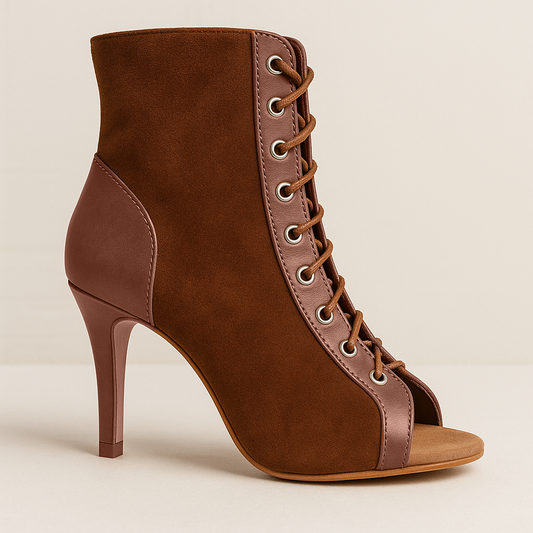
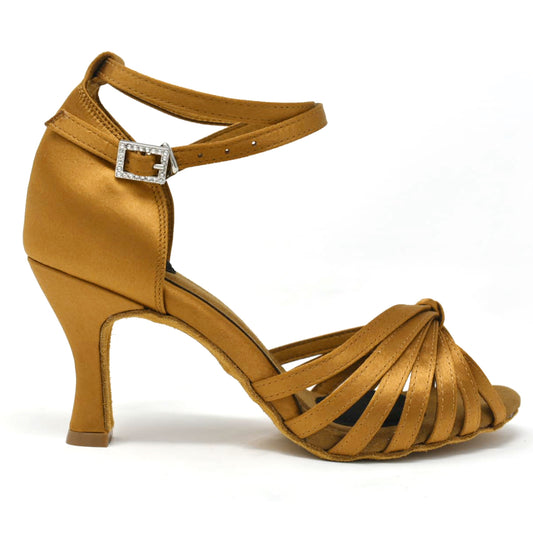
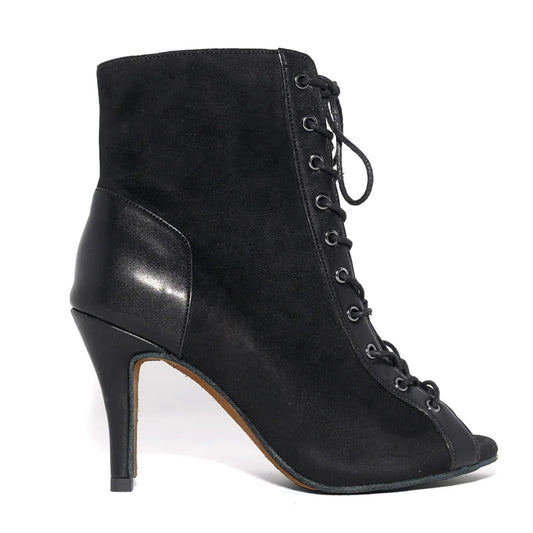
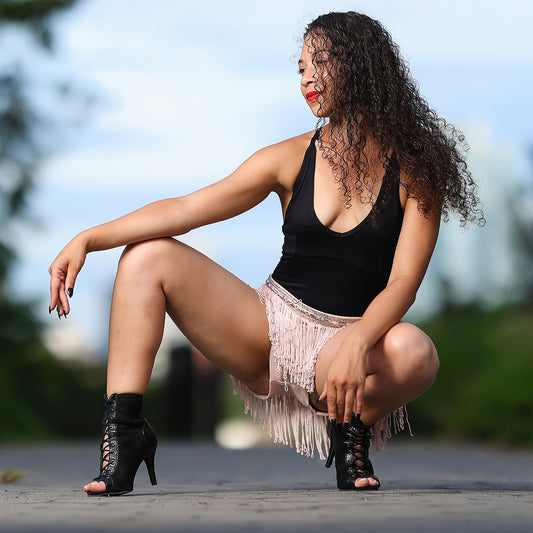
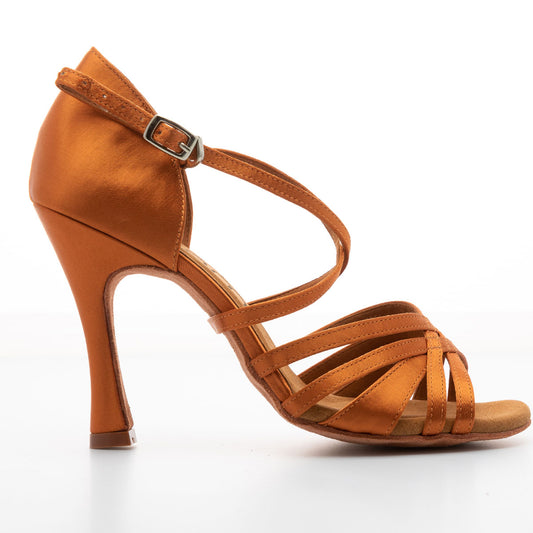
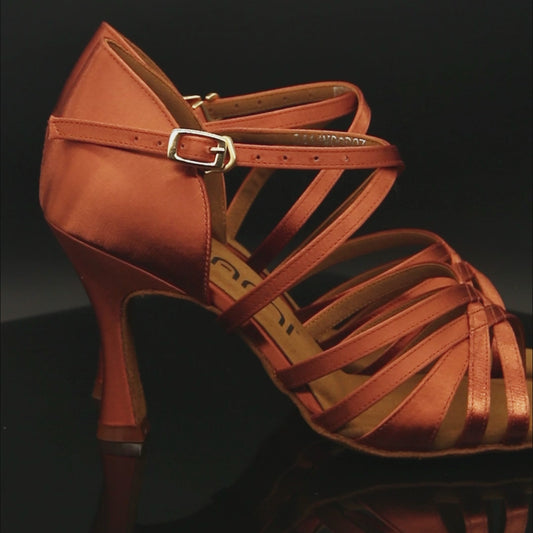
Every shoe pictured in this guide is an authentic Yami lace-up dance-shoe style.
Why Full Lace Dance Shoes Can Help Wide Feet
Women looking for dance shoes for wide feet are often told to size up. Sometimes that is appropriate, but adding length only to gain width may cause the heel to lift or the foot to slide forward.
A full-lace design provides another option. You can leave more room across a wider forefoot while keeping moderate tension through the midfoot and ankle. Your toes should not feel crushed, numb, or forced to curl, but your foot should not move freely from side to side.

Laces adjust the upper—not the sole underneath. If your forefoot extends significantly beyond the base, loosening the laces cannot make the platform wider. Consider another model, toe shape, or a TrueFit adjustable style.
Why Full Lacing Can Also Help Narrow Feet
Women with narrow or low-volume feet often experience too much empty space. The foot may move from side to side, slide toward the toes, or depend on one ankle strap to keep the shoe on.
With full lace dance shoes, you can draw the upper closer in stages. Begin with gentle tension near the forefoot and work upward. The goal is connection—not painful compression. The heel cup must still match your heel; tightening the front cannot completely correct an oversized back.


Different lace-up silhouettes interact with the foot differently. The best choice depends on your length, forefoot shape, heel shape, and volume—not simply the word “narrow” or “wide.” Read our wide-versus-narrow dance shoe guide for a deeper explanation.
What About Feet That Change During the Day?
My feet do not always feel the same at night as they did when I left home. After sitting, standing, walking, commuting, and dancing, a comfortable shoe may feel more restrictive later.
That is where adjustable dance shoes can be practical. Sit down, loosen only the area that feels pressured, keep the midfoot and ankle secure, and test the shoe before returning to the floor. Do not dance through numbness, burning, tingling, or sharp pain. Sudden, severe, persistent, or one-sided swelling should be assessed by a healthcare professional.


Full Lace vs. TrueFit vs. Traditional Strappy Heels
| Feature | Full lace | TrueFit | Traditional straps |
|---|---|---|---|
| Adjustment area | Forefoot, instep, midfoot, sometimes ankle | Primarily toe box and forefoot | Usually ankle strap |
| Best for | Multi-zone volume adjustment | Targeted front adjustment | Feet matching the standard shape |
| During a social | Highly adjustable | Adjustable at front | Limited |
| Main limitation | Cannot correct wrong length or platform width | Does not adjust every area | Few customization points |
What Full Lacing Cannot Fix
- A shoe that is too short: loosening laces cannot add length.
- A shoe that is too long: tightening may temporarily hide forward sliding.
- A platform that is too narrow: the base must support the forefoot.
- A heel cup that is too roomy: lacing cannot completely reshape the back.
- A heel that is too high: secure laces do not replace balance and control.
- The wrong sole: a good upper cannot make an outsole suitable for every floor.
How Full Lace Dance Shoes Should Fit
- Measure both feet near the end of the day and begin with the longer foot.
- Loosen the entire upper so your foot enters without being forced.
- Seat your heel fully into the back before tightening.
- Adjust from the forefoot upward: comfortable in front, secure through the middle, contained near the ankle.
- Stand before judging because feet spread under body weight.
- Test movement with weight transfers, side steps, pointing, a controlled pivot, and gentle turns.


Use the Yami Size Chart and review what actually happens when dance shoes stretch before assuming a painful shoe will transform with wear.
Choose the Right Outsole for Where You Dance
Yami’s full-lace collection includes street-friendly and indoor-outdoor options. For any model, verify the current outsole description on its product page before choosing it for a specific floor.


Suede is generally intended for compatible, clean indoor dance floors and controlled glide. A street-friendly sole is more practical for restaurants, clubs, patios, festivals, and evenings that move between indoor and outdoor areas. Compare the trade-offs in our Street Sole vs. suede guide.
Comfort Is Part of Taking Your Dancing Seriously
We can challenge ourselves, improve our technique, and chase ambitious goals without treating avoidable discomfort as proof of commitment. Yami shoes are designed with padding under the balls of the feet and heels, but cushioning works best with correct sizing, secure fit, a controllable heel, and the appropriate outsole.

Frequently Asked Questions
Should I size up for wide feet?
Not automatically. Full lacing may create enough upper room without adding length. If the platform is too narrow, choose another model.
Are full lace dance shoes good for narrow feet?
They can be. Laces may reduce excess space through the forefoot, instep, and midfoot, but the heel cup must still fit.
Can full lacing stop heel slipping?
It may reduce movement when the length and heel shape are close to correct. It cannot completely fix an oversized heel cup.
Can I loosen the shoes during a social?
Yes. Adjust the pressured area while keeping the rest of the shoe secure.
Are all full-lace shoes suitable outdoors?
No. Check whether the model has suede, StreetSole, or another street-friendly outsole.
Should dance shoes feel tight?
They should feel secure and responsive—not numb, burning, sharply painful, or severely compressed.
Choose Shoes That Support Your Life and Your Dreams
You do not need to be a professional to take dancing seriously. You can have a day job, family, responsibilities, and a long list waiting for tomorrow—and still care deeply about becoming a better dancer.
The right full lace dance shoes should support that goal. Choose the correct length, respect your natural foot shape, select a heel you can control, match the outsole to the floor, and use the laces to refine the fit—not force the wrong shoe to work.
Your ambitions do not become less meaningful because you pursue them after work.
Find a Fit That Moves With You
Explore Yami’s full lace-up dance shoes and find a style designed to move with your feet, your schedule, and the dancer you are becoming.
Explore Yami Full Lace-Up Dance Shoes