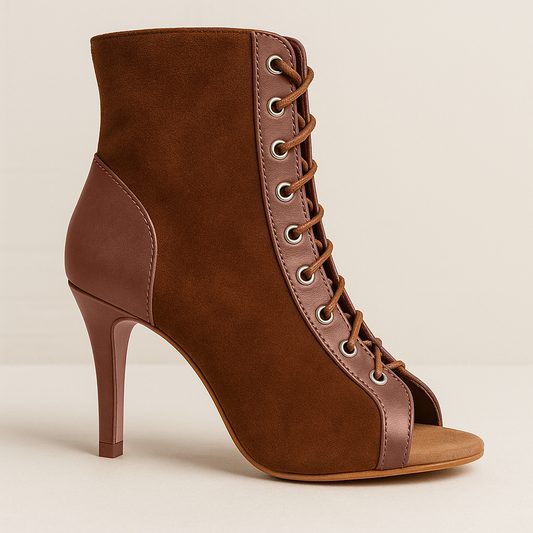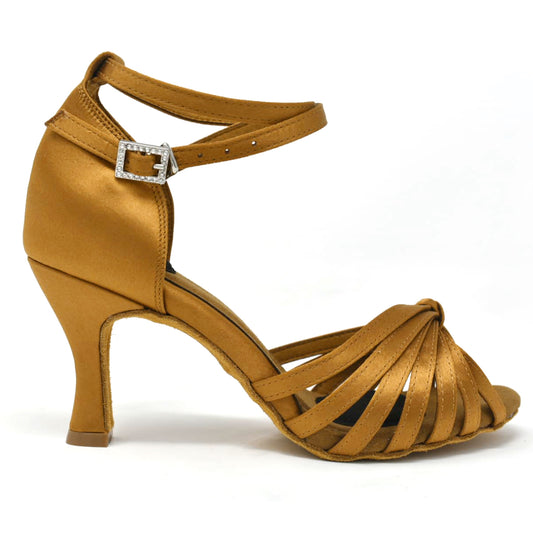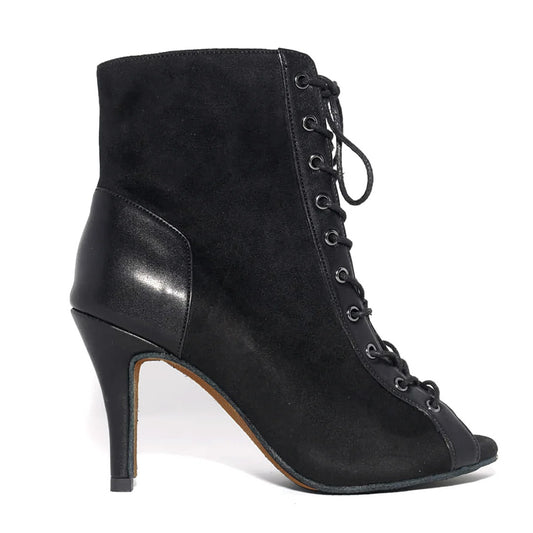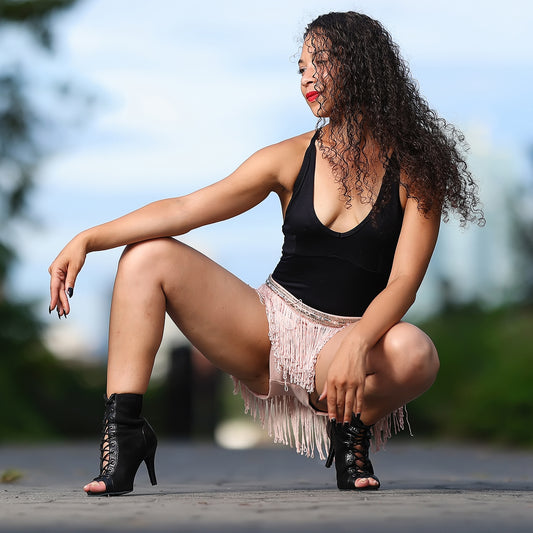

A dance shoe can look perfect and still feel wrong once you start moving. Your toes may feel squeezed, your heel may lift, or a shoe that felt secure at the beginning of the night may become uncomfortable several dances later. That is why full lace dance shoes deserve more attention.
In Yami’s storefront search data from March 2022 through February 2025, “full lace” was the most-searched term, appearing 1,185 times. Dancers want more control over fit.
The biggest benefit is adjustability. Instead of relying on one fixed strap, you can change the tension across several parts of the foot. That can be useful for wide forefeet, narrow or low-volume feet, and feet that feel fuller after hours of dancing.
However, laces cannot correct the wrong length, heel cup, or sole. Here is how to decide whether this style is right for you.
What Are Full Lace Dance Shoes?

Full lace dance shoes use a lacing system that extends across much of the upper rather than relying only on a buckle or a few fixed straps. Depending on the model, the laces may adjust the forefoot, midfoot, instep, and area around the ankle.
That gives you control over shoe volume—the space your foot occupies inside the upper. Two dancers can wear the same size while having very different widths, arch heights, and foot volumes.
Fit is about more than length. A 2018 systematic review in the Journal of Foot and Ankle Research found that 63% to 72% of participants in the included studies wore shoes that did not accommodate their foot length or width. Those studies were not dancer-specific, but they show why choosing footwear by size number alone can fail.
Why Full Lace Dance Shoes Work for Wide and Narrow Feet

Dance Shoes for Wide Feet
Many dancers with a wider forefoot automatically size up. That may create a new problem: the toe area feels better, but the shoe becomes too long and the heel begins to slip.
Full lacing may be a better solution when the main issue is upper volume. You can loosen the lower sections across the ball of the foot while keeping the midfoot and ankle secure. This creates room where you need it without automatically adding length everywhere else.
A lace-up shoe is not guaranteed to fit every wide foot. If the sole platform or toe shape is too narrow, loosening the laces cannot make the base wider. Start with the correct length, review the model’s fit notes, and use the Yami size chart before ordering.
A More Secure Option for Narrow Feet
Full lace dance shoes can also help dancers whose feet feel lost inside standard-width shoes. You can gradually tighten the upper to reduce extra space over the instep or forefoot.
The goal is not to squeeze your foot, but to reduce unnecessary movement. Your heel should not lift dramatically or slide forward during direction changes.
If the heel cup is much too wide, tightening the front may not solve the problem. Use our wide-versus-narrow dance-shoe guide to evaluate the rest of the fit.
Adjustability During Long Dance Nights
Feet can feel different as the night progresses. Warmth, repeated loading, and hours of dancing may make a shoe that felt comfortable at the first song feel more restrictive later.
One advantage of lace-up dance heels is that you can stop and make a small adjustment. Loosen the forefoot slightly while keeping the midfoot and ankle secure.
Do not keep dancing through numbness, tingling, or sharp pressure. Secure should never mean painfully tight.
Full Lace Dance Shoes vs. TrueFit vs. Traditional Strappy Heels

Full-lace Design
| Main adjustment area | Forefoot, instep, midfoot and sometimes ankle |
| Best For | Changing volume, wide or narrow feet, secure wrapping |
| Adjustment during an event | High |
| Time to put on | Usually longest |
| Important limitation | Cannot correct wrong length or sole width |
TrueFit adjustable toe box
| Main adjustment area | Primarily the toe-box area |
| Best For | Targeted forefoot adjustment |
| Adjustment during an event | High at the front |
| Time to put on | Moderate |
| Important limitation | Does not adjust every part of the upper |
Traditional strappy heel
| Main adjustment area | Usually ankle strap and buckle |
| Best For | Feet that already match the standard shape |
| Adjustment during an event | Limited |
| Time to put on | Usually fastest |
| Important limitation | Fewer fit adjustments |
Yami offers more than one way to customize fit.
Choose full lacing when you want adjustability across several zones. Choose TrueFit adjustable dance shoes when the forefoot is your main concern. Choose a traditional strappy heel when the standard shape already matches your foot.
How Full Lace Dance Shoes Should Fit

Use this process when trying on a new pair:
- Measure both feet and use the longer measurement for length.
- Try them on a clean surface with your usual dance hosiery.
- Begin with the laces loose and place your heel fully into the back.
- Adjust from the forefoot upward: comfortable at the toes, snug through the midfoot, and secure near the ankle.
- Stand before judging the fit because feet spread under body weight.
- Test slow pivots, side steps, weight changes, pointing, and basic patterns.
- Recheck for forward sliding, heel lift, pressure, numbness, or laces that repeatedly loosen.
A good fit feels responsive. Your foot should not float inside the shoe, but the shoe should not depend on extreme lace tension to stay in place.
Match the Sole to Your Dance Floor
“Full lace” describes the adjustable upper. It does not tell you what is underneath the shoe.
Suede or Indoor Dance Soles

A suede-style outsole is generally intended for clean indoor dance floors and controlled pivoting. Keep it away from rough outdoor surfaces and maintain it according to the product instructions.
Street-Friendly Soles

StreetSole models suit dancers moving between social venues and suitable indoor or outdoor surfaces. Yami’s Puchi Dance Booties and Lucila Street Sole Dance Shoes, for example, pair full-lace uppers with street-friendly outsoles and padded insoles.
Flexible Practice Soles

Some lace-up practice or jazz shoes use split-sole constructions for articulation. They can work well for classes and drills, but their traction and appearance differ from a Latin heel. Yami’s current lace-up jazz shoe, for example, uses a flexible split-sole construction rather than the rubber street sole found on models such as Puchi or Lucila.
Before buying, ask two questions:
- Does the upper fit my foot?
- Does the outsole fit my dance style and floor?
You need both answers.
Five Common Full-Lace Mistakes
1. Sizing Up Automatically for Width
A longer shoe may create heel movement and forward sliding. Check the model before changing length.
2. Pulling Every Section Equally Tight
Different areas may need different tension. A wider forefoot may need room while the instep needs a closer hold.
3. Using Laces to Fix the Wrong Shoe
If your toes hit the front, your heel sits outside the cup, or the platform is too narrow, choose another size or model.
4. Ignoring the Heel and Outsole
Laces cannot make an unsuitable heel height stable for your experience level or make an outdoor sole behave like suede.
5. Never Readjusting
One benefit of adjustable dance shoes is the ability to refine the fit. Check your laces after warming up and during long socials.
Who Should Consider Full Lace Dance Shoes?
This style may suit you when:
- Your forefoot is wider than your heel.
- Standard shoes feel roomy over the instep.
- Your feet feel fuller later in the night.
- You want more containment around the foot and ankle.
- You prefer a bootie or cage-style look.
- You want a street-sole option for mixed social settings.
- Fixed straps rarely feel secure.
Another design may be better when you need only toe-box adjustment, prefer a quick buckle, or want an open Latin-sandal look.
Frequently Asked Questions
Should I size up?
Not automatically. Choose length first, then use the laces to manage upper volume. Sizing up solely for width may cause sliding or heel lift.
Are these good dance shoes for wide feet?
They can be, especially when the issue is forefoot or instep volume. The shoe base must be wide enough.
Are they useful for narrow feet?
Yes. Tightening several zones can remove excess space, but the heel cup still needs to match your heel.
Can I loosen them as the night goes on?
Yes, you can make small adjustments during a long event. Persistent, severe, sudden, or one-sided swelling should be discussed with a qualified healthcare professional.
Can I wear them outdoors?
Only when the specific model has an outdoor-appropriate outsole. A lace-up upper does not automatically mean a street-ready sole.
Find a Fit That Moves With You
The best dance shoe is not simply the prettiest pair or the size you normally wear. It is the shoe that holds you securely, gives your foot enough room, matches your floor, and feels dependable.
Yami’s full lace dance shoes combine adjustable uppers with comfort-focused construction, including targeted padding under the balls of the feet and heels in many models. Explore Yami’s full collection of lace-up dance shoes, compare the outsole and heel choices, and choose the design that fits both your feet and the way you dance.