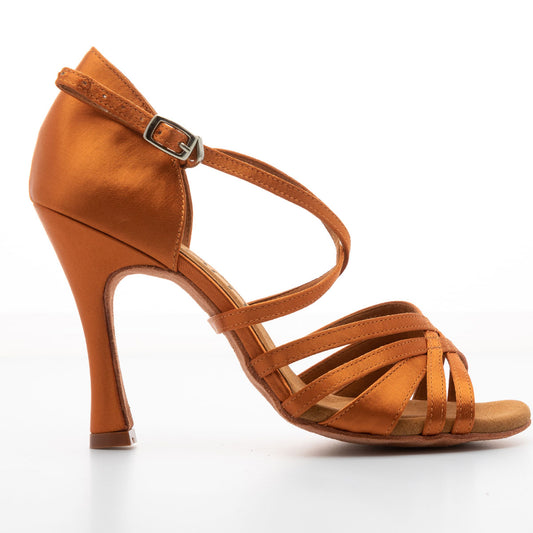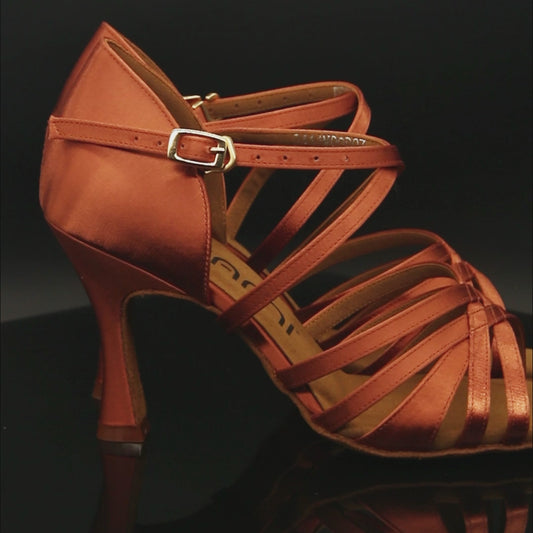

Dance shoe heel protectors are small accessories, but the wrong pair can cause a surprisingly big problem.
A loose protector may rotate or fall off. One that is too tight may not seat fully. A cap that does not match the heel shape can make the shoe feel uneven or leave part of the original heel tip exposed.
The most important rule is simple:
Heel caps are not universal. Match the protector to the exact heel shape and size—not to your regular shoe size.
What Are Dance Shoe Heel Protectors?
Dance shoe heel protectors are removable covers fitted over the lower portion of a dance heel. They are commonly made from clear or translucent plastic and are intended to protect the original heel tip and reduce concentrated wear on sensitive dance floors.
The terminology can be confusing:
| Term | What it usually means |
| Heel protector | Removable cover over the heel tip or lower heel |
| Heel cap | Often another name for a removable protector |
| Heel cover | May mean a protector or a decorative fabric covering |
| Replacement heel tip or top lift | Permanent wear piece attached to the heel |
| Heel guard | Broad term used for several protective products |
A removable heel cap is not the same as a replacement heel tip installed by a cobbler.
That distinction matters. A heel protector is designed to wear down and be replaced. The permanent heel tip is part of the shoe’s construction and may require professional repair when it becomes severely worn.
What Do Heel Protectors Actually Do?

Properly fitted dance shoe heel protectors can:
- Reduce wear on the original heel tip
- Help protect sensitive dance floors
- Preserve the appearance of the lower heel
- Wear down before the permanent heel tip does
- Help satisfy studio or venue footwear rules
They cannot repair a loose heel, replace a worn-through tip, correct a wobbling shoe, or make an unsuitable heel height comfortable.
Research on heeled footwear shows that greater heel elevation shifts more pressure toward the forefoot. A plastic heel cap does not reverse that effect.
In other words, a heel protector is a maintenance accessory—not a cushioning system or structural repair.
Why the Correct Heel-Cap Size Matters

Your women’s shoe size does not determine your protector size.
A dancer who wears a size 7 and a dancer who wears a size 10 may use the same cap when their shoes have the same heel mold. Two size 7 shoes may require different caps when one has a flared heel and the other has a stiletto.
Match the cap to:
- Heel height
- Heel shape
- Heel-tip width
- Front-to-back depth
- Heel taper
- Brand and model
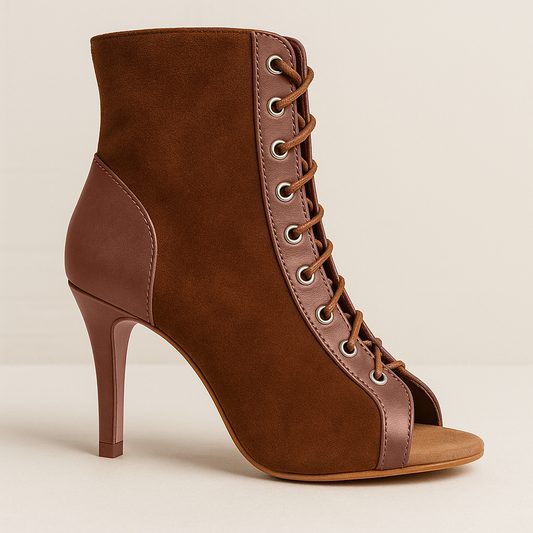
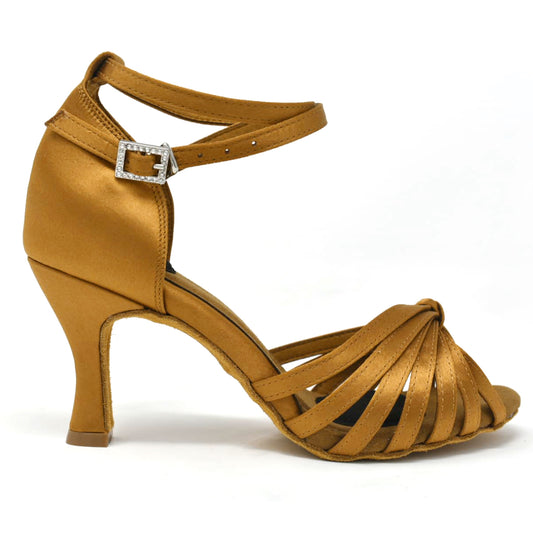
Yami’s heel-cap listing separates 2.5-inch flared, 3-inch flared, 3.5-inch flared, and 3.5-inch stiletto options. These are different variants because the heel shapes and base measurements are not interchangeable.
Flared vs. Stiletto Heel Protectors

| Heel type | Bottom shape | What the protector must match | Common mistake |
| Flared | Widens toward the floor | Base width and flared contour | Buying by height only |
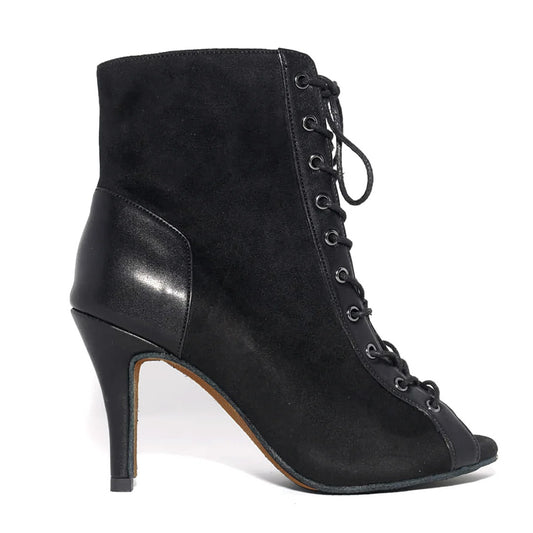
| Stiletto | Narrow, slim tip | Small opening and close fit | Forcing on a flared-heel cap |
| Straight | More vertical sidewalls | Straight lower profile | Assuming it matches a flare |
| Cuban or block | Broad, chunky base | Usually a different protector style | Using a women’s Latin heel cap |
| Custom or chrome | Model-specific geometry | Exact manufacturer match is safest | Choosing by appearance alone |
A 3.5-inch flared heel and a 3.5-inch stiletto heel can require completely different protectors, even though their listed height is identical.
How to Identify Your Heel Before Ordering
Check Your Original Order
Look at your order confirmation, packing slip, account history, or product page.
The heel may be identified as:
- 2.5-inch flared
- 3-inch flared
- 3.5-inch flared
- 3.5-inch stiletto
- 4-inch flared
This is the best place to begin.
Confirm the Exact Shoe Model
Write down the full model name and color.
Two models from the same brand can use different heel molds, even when the advertised height appears similar. Do not identify the shoe only as “my Yami heel” or “my 3-inch shoe.”
View the Heel From Two Angles

Take one photograph from the side and another directly underneath.
A flared heel becomes wider near the floor. A stiletto stays narrow. The underside photograph helps reveal the actual heel-tip shape.
Measure When Necessary
Use a ruler or caliper to measure:
- The widest side-to-side dimension
- The front-to-back depth
Measure the bottom section that enters the protector—not the upper or middle of the heel.
Millimeters are more useful than inches for this small measurement.
Match All Four Details
The safest match uses:
- Brand
- Shoe model
- Heel height
- Heel shape
Do not assume another brand’s cap will fit simply because both shoes are described as having a 3-inch heel.
How Should a Correct Heel Cap Fit?

A correct heel cap should:
- Sit fully against the bottom of the heel
- Remain centered
- Feel equally secure on both shoes
- Show no obvious gap
- Avoid rocking from side to side
- Stay in place during slow test steps
- Leave both heels at the same effective height
It should not:
- Rotate freely
- Slide off with light pressure
- Bulge dramatically
- Stop halfway onto the heel
- Make one shoe feel taller
- Cause the shoe to rock
New dance shoe heel protectors often feel snug. Snug is appropriate; distorted, half-installed, or uneven is not.
How to Install Dance Shoe Heel Protectors

Always follow the directions included with the specific cap. When no special method is provided, use this process.
1. Inspect the Heel First
Do not cover:
- A cracked heel
- A loose or wobbling heel
- An exposed metal pin
- A severely worn permanent tip
- A heel that is separating from the shoe
Repair those problems first.
2. Clean and Dry the Heel Tip
Remove dust and debris with a dry cloth. Dirt trapped between the heel and cap can interfere with the fit.
3. Compare the Two Protectors
Make sure both caps are identical and undamaged before installation.
4. Align the Opening
Hold the shoe firmly and position the protector so its opening matches the shape of the heel tip.
5. Press Straight and Evenly
Push the cap upward with steady pressure.
Do not:
- Aggressively twist the heel
- Bend the heel sideways
- Pry with a knife or screwdriver
- Hammer the protector into place
If the cap requires extreme force, stop and verify the size.
6. Avoid Glue
A removable cap should normally remain removable.
Glue can:
- Damage the heel finish
- Hide an incorrect fit
- Make future replacement difficult
- Prevent proper inspection of the permanent tip
Use adhesive only when the shoe or protector manufacturer specifically instructs you to do so.
7. Match Both Shoes
Install both caps to the same depth. One cap sitting lower than the other can change how the shoes feel.
8. Test Before Dancing
On a clean floor:
- Walk slowly.
- Transfer weight from side to side.
- Perform basic steps.
- Try a gentle turn.
- Recheck both caps.
Do not wait until a performance, competition, or important social to test new dance shoe heel protectors.
Some cap designs include special fitting directions, such as controlled warming. Do not use boiling water, a hair dryer, or direct heat unless the manufacturer explicitly permits it.
Use This Five-Point Check Before Dancing
Ask these five questions:
- Does either cap rotate?
- Is there a visible gap?
- Does one heel feel taller or less stable?
- Is the plastic cracked or heavily worn?
- Does either shoe rock on a flat surface?
A “yes” means the heel needs to be inspected before use.
When Should You Replace Heel Protectors?

Replace dance shoe heel protectors when they:
- Crack or split
- Become loose
- Wear unevenly
- Develop a hole
- Show heavy stress marks
- Repeatedly fall off
- Allow the original tip to show through
- Make one heel contact the floor differently
Do not wait for a protector to fail in the middle of a social.
Keep a spare pair in your shoe bag, especially when traveling to a congress, competition, festival, or performance.
When a Heel Protector Is Not Enough
A heel cap is a removable wear layer—not a structural repair.
Contact the shoe manufacturer or a qualified cobbler when:
- The heel moves or wobbles
- The heel separates from the shoe
- The permanent tip has worn through
- A metal pin is exposed
- The heel is cracked
- The shoe no longer sits evenly
- The heel covering has badly detached
Continuing to dance on a damaged heel can worsen the problem and make the shoe less predictable.
The Real Lifespan of Dance Shoes
How to Care for Your Dance Shoes
Do Heel Caps Change Balance or Spinability?

A correctly fitted cap may slightly change how the heel contacts the floor because it adds material around the original tip.
The change should be small and consistent, but dancers who are sensitive to balance may notice it. This is another reason to install and test heel caps before an important performance.
Most dance turns happen through the forefoot rather than directly on the heel. If a shoe suddenly feels unstable after caps are installed, recheck:
- Protector size
- Installation depth
- Left-to-right symmetry
- Condition of the permanent heel tip
- Whether the cap is rotating
Do not assume you simply need to “get used to it.”
Do Studios and Competitions Require Heel Protectors?
Policies vary.
Some studios, ballrooms, competitions, and event organizers request or require heel protection. Others do not.
Before an event:
- Review the organizer’s footwear rules.
- Ask whether clear protectors are required.
- Confirm whether a particular cap style is prohibited.
- Bring a spare pair.
- Install and test them before entering the floor.
Do not assume that the policy from one venue applies everywhere.
Heel-Cap Care and Storage

After dancing:
- Wipe the caps.
- Inspect the bottoms.
- Check for cracks or uneven wear.
- Allow the shoes to dry.
- Store them in a breathable shoe bag.
Place spare caps in a small pouch labeled with:
- Shoe model
- Heel height
- Heel shape
This prevents a common problem: finding several clear protectors later and no longer knowing which shoe they match.
Common Heel-Protector Mistakes
Buying by Shoe Size
Your regular shoe size does not determine heel-cap size.
Buying by Heel Height Alone
A flare and stiletto of equal height can have completely different bases.
Forcing the Wrong Cap
Excessive force can distort the protector or place unnecessary pressure on the heel.
Hiding Damage
A heel cap does not repair a loose, cracked, or worn-through heel.
Using Glue Automatically
A removable protector should normally remain removable.
Skipping the Test
A cap that looks secure while the shoe is sitting may shift when your full body weight is applied.
Frequently Asked Questions
Are heel caps and heel protectors the same?
Often, but terminology varies. Check the actual product design rather than relying only on the name.
Can one cap fit every 3-inch heel?
No. Heel shape and base dimensions matter as much as height.
Can I dance without heel protectors?
Yes, unless the venue requires them. Their primary purpose is to protect the heel tip and floor.
Will heel protectors make high heels more comfortable?
Not significantly. They do not add forefoot cushioning or correct the pressure created by an unsuitable heel height.
Can I leave them installed permanently?
You can leave them on while they remain secure, clean, and undamaged. Inspect them regularly and replace them when they begin to wear.
What should I do if the cap keeps falling off?
Stop using it and confirm the exact heel model. Do not rely on glue to compensate for the wrong size.
Protect the Heel Without Compromising the Shoe
The best dance shoe heel protectors fit securely, sit evenly, and match the exact heel mold.
Start with the shoe model. Then confirm heel height and shape. Install both caps to the same depth, test them before dancing, and replace them at the first signs of cracking, looseness, or uneven wear.
Yami offers Latin dance shoes in several flared and stiletto heel options, so use heel-specific accessories rather than generic one-size-fits-all caps.
Explore Yami’s dance shoes and care resources, and check current heel-cap availability before your next social, congress, competition, or performance.
Best Heel Height for Salsa and Bachata
Latin Dance Shoes collection