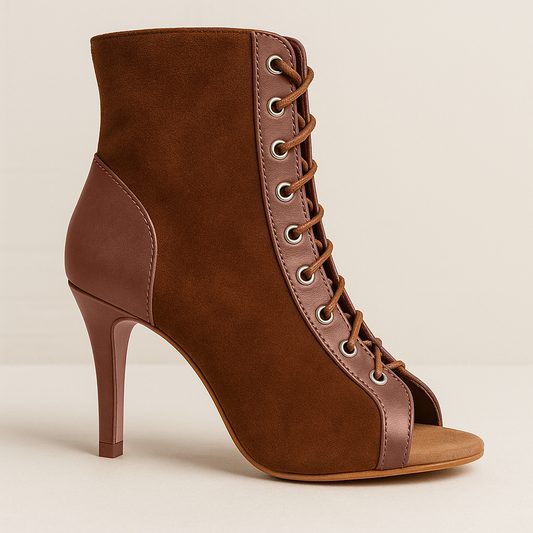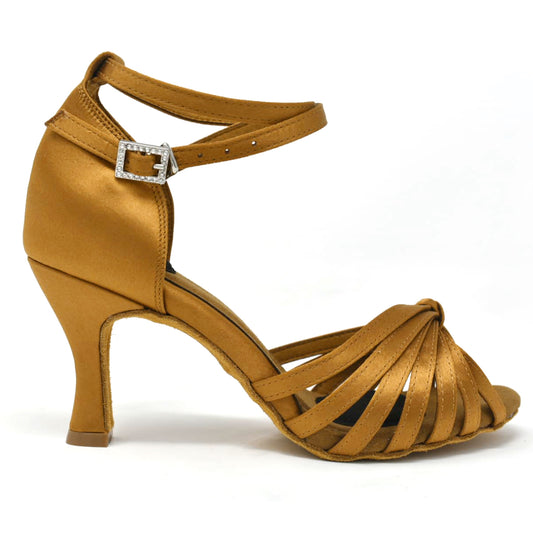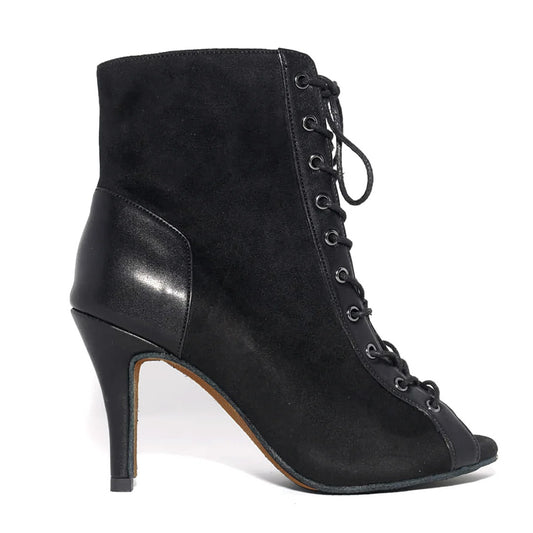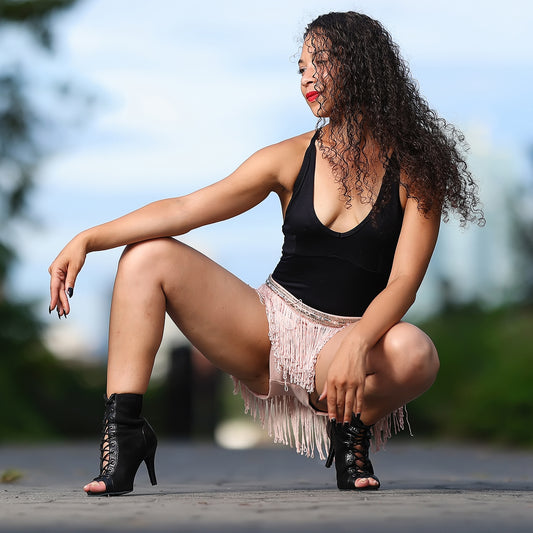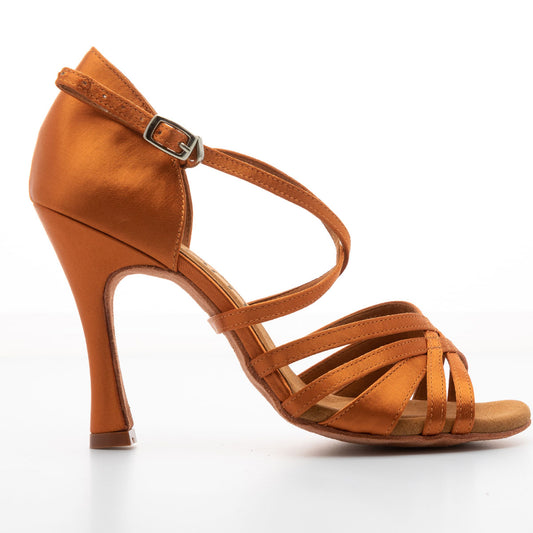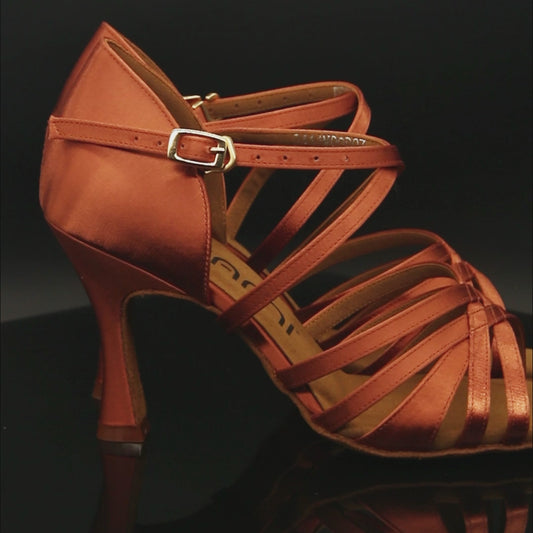

Choosing Latin dance shoes is exciting until you reach the heel menu. Should you order 2.5 inches because it looks stable, 3 inches because it seems standard, 3.5 inches for a longer leg line, or 4 inches for maximum impact?
The best heel height for salsa is not simply the tallest heel you can stand in. It is the height that lets you maintain balance, transfer weight cleanly, control your turns, and keep dancing after the first few songs.
Your ankle strength, foot shape, shoe construction, floor, and dancing time all matter. A performer who uses 3.5 inches onstage may still prefer 2.5 inches for a long social.
Quick Answer: What Is the Best Heel Height for Salsa?
For many social dancers, a 3-inch flared heel offers the strongest balance of elegance, stability, and mobility. Beginners, dancers returning after a break, and anyone prioritizing endurance may feel more confident in 2.5 inches. Experienced dancers may prefer 3.5 inches for stronger visual lines, while 4-inch heels are generally best for dancers who already have the strength and control to manage the steeper angle.

| Heel height | Best for | Main advantage | Main consideration |
| 2.5 inches | Beginners, long socials, comfort-focused dancers | Stability and endurance | Less dramatic leg line |
| 3 inches | Most social salsa and bachata dancers | Strong style-and-control balance | More forefoot load than 2.5 inches |
| 3.5 inches | Experienced dancers and performers | Elegant line and elevated look | Requires greater strength and control |
| 4 inches | Advanced dancers and short performances | Maximum visual impac | Steepest angle and greatest technical demand |
These are guidelines, not rules. The correct height is the one in which your posture and technique remain consistent from the beginning of the event to the end.
How Heel Height Changes Your Dancing
A heel changes more than your appearance. It raises the rear of the foot, places the ankle in a more pointed position, and shifts more load toward the forefoot.
Research on conventional high heels—not dance shoes specifically—shows that increasing heel height changes balance, lower-body mechanics, and pressure distribution beneath the foot. Dance heels are lighter, more flexible, and more secure than street heels, but added height still places greater demands on fit, strength, and stability.
Pressure also tends to move toward the ball of the foot as the heel rises. Yami addresses this with targeted padding beneath both the forefoot and heel. Cushioning can improve comfort, but it cannot compensate for a height that causes toe gripping, locked knees, leaning, or loss of balance.
Is a 2.5-Inch Heel Right for You?

A 2.5-inch heel is one of the smartest choices for Latin dance shoes for beginners. It still creates a polished dance silhouette while making it easier to find your center and recover from small balance errors.
Choose 2.5 inches when:
* You are buying your first pair of dance heels.
* You are still developing confidence with salsa turns and footwork.
* You attend long classes, festivals, or socials.
* You do not regularly wear heels.
* You have experienced forefoot, ankle, or calf fatigue in higher shoes.
* Endurance matters more than maximum height.
A lower heel is not merely a beginner option. Experienced dancers often use 2.5 inches for teaching, rehearsals, congress weekends, and long socials. Yami customers have described the 2.5-inch Dana ProFlex as stable, flexible, and comfortable for extended dancing.
Why 3 Inches Is the Sweet Spot for Many Social Dancers
If you are comfortable in heels but do not want to sacrifice stability, 3 inches is often the most versatile choice.

A 3-inch flared heel lengthens the leg line while offering more stability than most 3.5- or 4-inch options. It also works across salsa, bachata, cha-cha, and ballroom practice.
This is why the best heel height for salsa is often 3 inches for someone who wants one pair for classes, socials, and occasional performances.
A well-placed heel should feel connected and stable rather than as though it is tipping you forward. Heel placement matters because your leg muscles must continually stabilize the shoe during weight transfers, turns, and changes of direction.
A steady 3-inch heel can therefore feel easier to dance in than a lower heel that is poorly positioned or unstable.
When to Choose a 3.5-Inch Heel
A 3.5-inch heel creates a more dramatic line through the foot and leg. It is popular for performances, dance videos, competitions, and dancers who enjoy a higher Latin silhouette.

Consider 3.5 inches when you:
* Already dance confidently in 3-inch heels
* Can complete turns without wobbling
* Do not grip the shoe with your toes
* Maintain soft knees rather than locking them
* Fully transfer your weight from foot to foot
* Have enough ankle and calf endurance for the entire event
* Feel comfortable with additional pressure beneath the forefoot
Your performance heel may be higher than your social-dancing heel. A dancer might perform in 3.5 inches and then change into a lower pair for the social.
That is not a step backward. It is choosing the right tool for the job.
The Ambar ProFlex offers flared options from 2.5 to 4 inches, making it easier to choose the same general shoe style at a height that matches your dancing.
Who Should Choose a 4-Inch Dance Heel?
A 4-inch dance heel is a specialized choice. It creates striking visual height, but it also produces the steepest foot angle among these options.

Choose 4 inches only when you are comfortable in 3.5-inch heels, have rehearsed in the exact shoe, and can maintain alignment without pain, numbness, burning, or toe gripping.
You should also be able to:
* Complete turns without depending on your partner for balance
* Keep your knees relaxed
* Maintain full weight transfers
* Control both slow and fast movements
* Dance through an entire routine without losing posture
A 4-inch heel is not automatically the “advanced” choice. Advanced dancers often choose lower heels because they understand how fatigue affects technique.
Your first few minutes in a 4-inch heel may feel controlled. The real question is whether you can maintain that control after several rehearsals, classes, or social dances.
Best Heel Height for Salsa vs. Bachata
Neither dance requires a particular heel height. Both can be danced beautifully in low heels, high heels, boots, or flats.
Choosing a Heel for Salsa
Salsa often includes faster weight transfers, turns, shines, and changes of direction. For social salsa, 2.5 to 3 inches gives many dancers a practical balance of speed and stability.
Your salsa dance heel height should allow you to:
* Keep your steps underneath your body
* Pivot without losing your center
* Maintain relaxed knees
* Transfer your weight on time
* Complete several songs without your technique deteriorating
The best heel height for salsa should make your movement feel more controlled—not force you to take smaller, hesitant steps because you are afraid of losing your balance.
Choosing Bachata Dance Heels
Bachata can involve slower weight changes, hip articulation, toe leads, body movement, and controlled leg lines. Some dancers prefer 3- or 3.5-inch bachata dance heels because of the visual line they create.
However, sensual styling does not require a high heel. If a taller shoe prevents you from grounding your standing leg, bending your knees, or controlling your movement, a lower heel will produce better dancing.
For mixed salsa-and-bachata socials, choose the height that works for your more demanding style. If salsa turns feel unstable at 3.5 inches, wear 3 inches even if you prefer the taller look for bachata.
Flared Heel vs. Stiletto Heel

Heel shape can matter almost as much as heel height.
A flared heel widens toward the floor and is generally more forgiving for beginners, crowded socials, and long events. The larger contact area can make it easier to recover from small changes in balance.
A stiletto creates a narrower, more dramatic line but requires more precise balance and stronger ankle control.
When comparing a flared heel vs. stiletto heel, consider:
* Your current dance experience
* The length of the event
* The condition of the floor
* Whether you will be performing or social dancing
* Your ankle strength and balance
* How crowded the dance floor may become
A 3.5-inch flared heel and a 3.5-inch stiletto can feel very different even though the listed height is identical.
For most beginners, a flared heel is the better starting point.
Fit, Toe Box, and Straps Matter as Much as Height

Two shoes with the same heel measurement can feel completely different.
Your heel should remain seated instead of lifting away from the shoe. Your foot should not slide forward and crowd the toes. The straps should secure the midfoot without cutting into the skin, and you should not need to curl your toes to keep the shoe attached.
If your foot slides forward, more pressure reaches the toes and ball of the foot. This becomes even more noticeable as heel height increases.
A secure fit helps the shoe move as part of your foot. A loose fit forces you to compensate by gripping your toes or tightening your legs.
Dancers with narrow or wide feet may benefit from an adjustable toe box. Read Wide or Narrow Feet? and How Should Dance Shoes Fit? before ordering.
How to Test a New Heel Height
Only test new dance shoes on a clean, smooth indoor surface so they remain eligible under the applicable exchange policy.
Follow this movement test:
1. Stand naturally without holding onto furniture.
2. Shift your full weight from one foot to the other.
3. Take basic steps forward, backward, and side to side.
4. Perform slow quarter turns in both directions.
5. Dance your basic for two complete songs.
6. Try several faster turns at a controlled speed.
7. Check for toe gripping, locked knees, sliding, burning, numbness, or wobbling.
8. Repeat the test later in the day, when your feet may be slightly fuller.
Judge the shoe by the movements you will perform—not only by the mirror.
Final Recommendation
- Choose 2.5 inches for maximum stability, beginner confidence, and long-wear comfort.
- Choose 3 inches for the strongest all-around combination of style and social-dance performance.
- Choose 3.5 inches when you have established control and want a more dramatic line.
- Choose 4 inches for experienced, fully rehearsed performance use.
The best heel height for salsa is not the one that makes you look most advanced while standing still. It is the height that lets you dance with control, confidence, musicality, and comfort.
When deciding between two heights, choose the lower one unless you already know you can maintain your technique in the higher option. A beautiful shoe should support your dancing—not become the thing you think about all night.
Frequently Asked Questions
Is a 3-Inch Heel Too High for a Salsa Beginner?
Not necessarily, particularly if you regularly wear heels and the shoe is stable. However, 2.5 inches is the more forgiving starting point for dancers who are new to both salsa and heels.
Are Higher Heels Better for Bachata Styling?
They can create a more dramatic line, but they do not automatically improve styling. Control, timing, weight placement, and extension matter more.
Is a Flared Heel Better Than a Stiletto?
For most beginners and social dancers, a flared heel provides greater stability. A stiletto is better suited to dancers who already have dependable balance and want a narrower performance silhouette.
What Is the Best Heel Height for Salsa and Bachata Combined?
For many dancers, a 3-inch flared heel is the most versatile compromise. Choose 2.5 inches if salsa turns or long events feel unstable. Choose 3.5 inches only when you can maintain equal control in both styles.
Should I Own More Than One Heel Height?
Many dancers eventually do. A lower pair can be used for classes, rehearsals, and long socials, while a higher pair can be reserved for performances, special events, or styling-focused practice.
Ready to find your height? Explore Yami’s women’s Latin dance shoes, including flexible ProFlex styles and adjustable TrueFit options, all designed with targeted padding beneath the balls of the feet and heels.
Choose the shoe that helps you stop thinking about your feet—and start enjoying every dance.