
Line dancing looks simple from the sidelines—until you are several songs into class, repeating grapevines, shuffles, heel digs, kick-ball-changes, and quarter turns on a hard floor. That is when your footwear starts making decisions for you.
The best shoes for line dancing should let you change direction smoothly, feel the floor, stay balanced, and remain comfortable through an entire class or social. They need enough traction for control, but not so much that your foot sticks when your body turns.
That balance matters whether you dance country, soul, trail-ride, or modern routines set to pop, R&B, and hip-hop. Vogue highlighted line dancing’s revival, while the Associated Press documented how “Boots on the Ground” helped bring trail-ride and soul line dancing to a broader audience. [Source Note 1]
So, do you need cowboy boots? Are regular sneakers good enough? Or are purpose-built dance sneakers the better investment?
What Makes the Best Shoes for Line Dancing?

A good line-dancing shoe must handle repeated weight changes and turns without making your feet work harder than necessary.
Look for five features:
- Controlled pivoting. The sole should permit turns without feeling dangerously slippery.
- Cushioning. Hard studio floors, concrete, and tile can become uncomfortable after repeated steps.
- Flexibility. The forefoot should bend naturally during shuffles and transitions.
- Secure fit. Your heel should stay seated and your foot should not slide sideways.
- Stability. The shoe should feel grounded during lateral movement.

The CDC recommends at least 150 minutes of moderate-intensity physical activity per week for adults and lists dancing as one way to stay active. Research published in 2025 also described line dancing as an activity with physical, mental, social, and cognitive benefits across age groups. [Source Note 2]
Dance Sneakers vs. Cowboy Boots for Line Dancing
Both can work. The right choice depends on the floor, your experience, your preferred style, and how long you plan to dance.
Cowboy Boots

Cowboy boots provide the classic country look, and a well-fitted pair with a smooth outsole can work beautifully for traditional country line dancing.
Choose boots when the sole allows controlled pivoting, the heel is stable, and the boot fits securely through the heel and instep. Avoid heavy work boots, deep tread, rigid soles, and loose heels. Some fashion boots also provide very little cushioning beneath the forefoot.
Before wearing boots for a full class, test several quarter turns and grapevines on the floor. Your foot should rotate without excessive effort while still feeling controlled.
Dance Sneakers

For many beginners and frequent dancers, dance sneakers for line dancing offer the easiest combination of cushioning, stability, and freedom of movement.
They are especially useful when you attend long classes, dance on hard surfaces, prefer a flat shoe, switch between country and soul routines, or find that ordinary athletic sneakers feel sticky during turns.
Yami SpinSoles were developed around that versatility. The outsole supports spins and transitions, while the curved forefoot helps dancers move onto the balls of their feet. Inside, Yami’s signature cushioning sits beneath both the ball of the foot and heel—the two areas that often feel the most pressure during extended dancing.
One verified Yami customer described her SpinSoles simply: “Super comfortable for line dancing!”
Explore the Yami Dance Sneaker Collection.
Can You Wear Regular Tennis Shoes to Line Dance?

You can begin in ordinary sneakers during an introductory lesson. However, running and training shoes are primarily designed for forward motion, impact absorption, or gym traction—not repeated pivots.
The main issue is grip. When tread grabs the floor during a turn, the upper body may continue rotating while the foot resists. In a study of country swing dancers, running shoes and rubber-bottom boots produced greater rotational “free moments”—a measure related to twisting load—than leather-bottom boots or dancing barefoot. Although not about line dancing, it shows how footwear changes rotational forces during dance. [Source Note 3]
This does not mean the slipperiest shoe is safest. Too little traction can cause an uncontrolled slide. The goal is a predictable balance of grip and glide.
Clean, lightweight sneakers may be acceptable for your first class. As classes become longer or turns become faster, purpose-built line dancing shoes can make movement feel more natural.
Read The Science of Spinning: Why Some Dance Shoes Make Turns Easier.
Best Shoes for Line Dancing on Different Floors

Hardwood or Smooth Studio Floors
Choose a sole that provides controlled glide. Dance sneakers, dance boots, and suitable cowboy boots can all work.
Concrete, Tile, and Community-Center Floors
Prioritize cushioning and shock absorption. Padded line dancing sneakers will often feel better than thin-soled fashion boots.
Outdoor Events and Rough Surfaces
Avoid traditional suede-bottom ballroom shoes outdoors. Moisture and pavement can damage the suede and make traction inconsistent. Choose durable dance sneakers or flexible StreetSoles designed for indoor-outdoor use.
Yami’s StreetSole Collection suits dancers who want a polished bootie or heeled silhouette without changing shoes between walking and dancing.
Also see our Floor Types and Dance Shoe Performance Guide.
Best Line Dancing Shoes for Bad Knees or Sensitive Feet

No shoe can treat knee or foot pain, and persistent discomfort should be evaluated by a qualified healthcare professional. Still, footwear can change how dancing feels.
Look for cushioning beneath the ball and heel, a stable heel cup, a secure fit, adequate toe room, lightweight construction, and a sole that pivots without excessive resistance.
For many dancers, the best shoes for line dancing with sensitive knees will be a cushioned dance sneaker rather than a heavy boot or high-grip running shoe. Yami SpinSoles combine a spin-friendly outsole with padded microfiber insoles, lightweight construction, and unisex sizing.
For additional guidance, read Dance Shoes for Foot Pain and Foot Conditions.
How Should Line Dancing Shoes Fit?

The best shoes for line dancing should feel secure without numbness, sharp pressure, or painful toe compression.
Your heel should remain seated when you step backward. Your toes should lie naturally, your foot should not slide during side steps, and the laces or straps should hold the midfoot securely. You should also be able to bend through the ball of the foot without gripping with your toes to keep the shoe on.
For SpinSoles, begin with your regular everyday shoe size. Dancers with wider feet may prefer going up half a size where available. Measure both feet and use the longer measurement when checking the size chart.
Read How Should Dance Shoes Fit? before ordering.
Which Line Dancing Shoes Should You Choose?

- Choose cowboy boots when the Western look is part of the experience, the boots fit securely, and the sole works well on your floor.
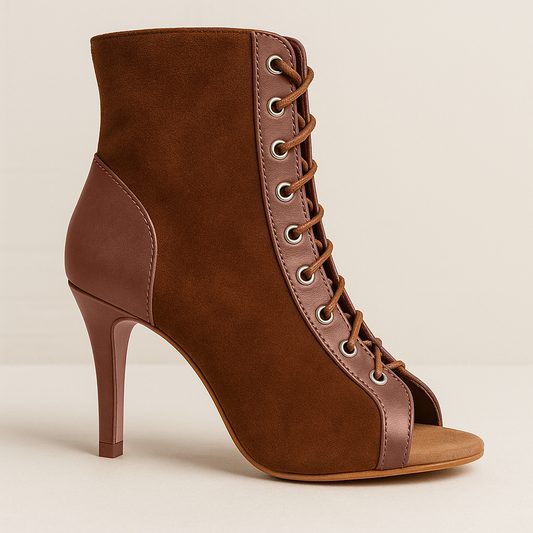
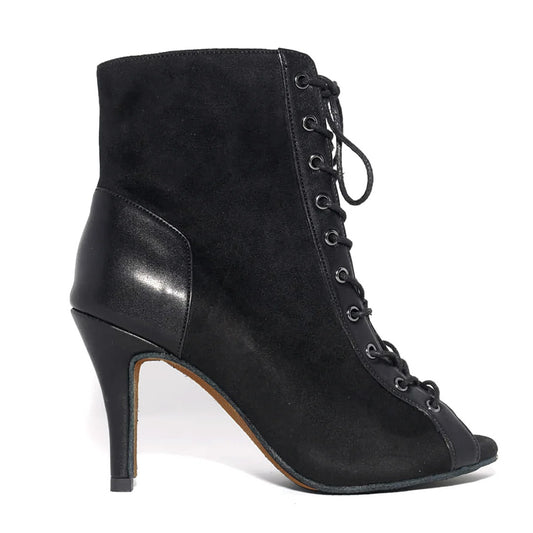
- Choose StreetSoles when you want a stylish bootie or heel and the flexibility to walk into the venue and dance without changing footwear.
- Choose SpinSoles when comfort, repeated turns, versatility, and long-wear cushioning are your priorities. For many beginners and frequent social dancers, they are the most forgiving place to start.
Ultimately, the best shoes for line dancing are the shoes that let you stop thinking about your feet. You should be able to hear the count, follow the sequence, laugh through mistakes, and stay for the next song.
Frequently Asked Questions About Line Dancing Shoes
Do you need cowboy boots to line dance?
No. Cowboy boots are traditional, but dance sneakers, dance boots, and other smooth-soled shoes can work just as well.
Are dance sneakers good for line dancing?
Yes. They combine cushioning, flexibility, stability, and soles developed for turns.
What should a beginner wear?
Choose secure, comfortable shoes without excessively sticky tread. Lightweight sneakers can work for a trial class; dance sneakers are better for regular participation.
Can you line dance in running shoes?
You can, but deep or tacky tread may make pivots difficult. Change shoes if your feet feel stuck during turns.
What are the best shoes for line dancing on concrete?
Choose cushioned dance sneakers or flexible indoor-outdoor dance shoes. Avoid thin, rigid soles with little impact protection.
Should line dancing shoes be slippery?
They should allow controlled rotation, not uncontrolled slipping. The ideal sole gives enough grip for balance and enough glide for pivots.
Can men wear SpinSoles for line dancing?
Yes. SpinSoles are unisex and offered in women’s and men’s sizes.
Ready to find the best shoes for line dancing without sacrificing comfort or style? Explore the complete Yami SpinSole Dance Sneaker Collection and discover footwear designed to help you turn smoothly, dance longer, and enjoy every count.