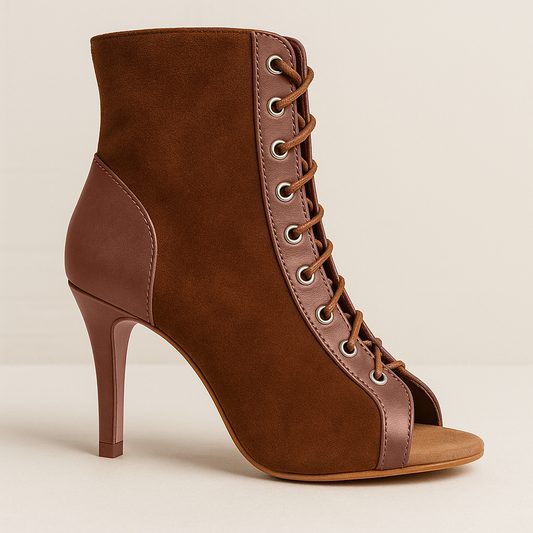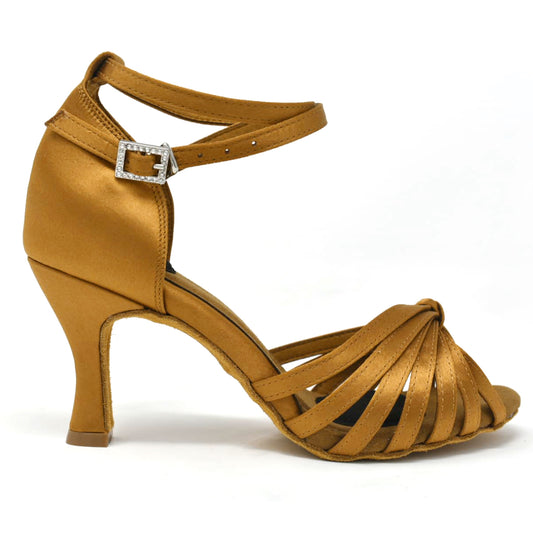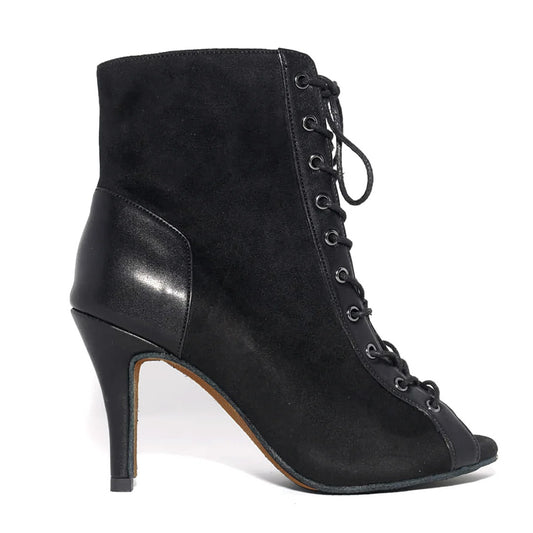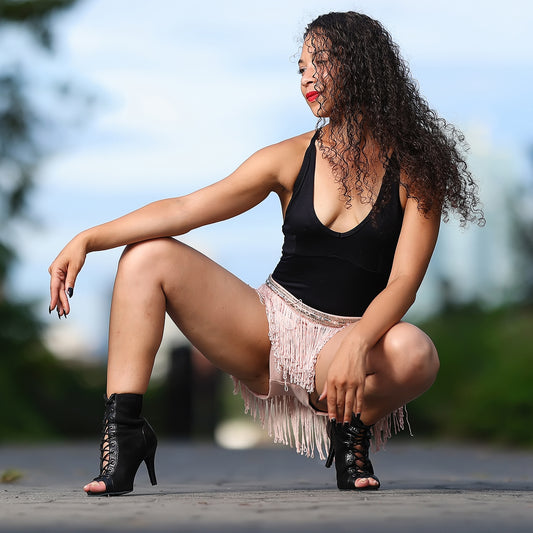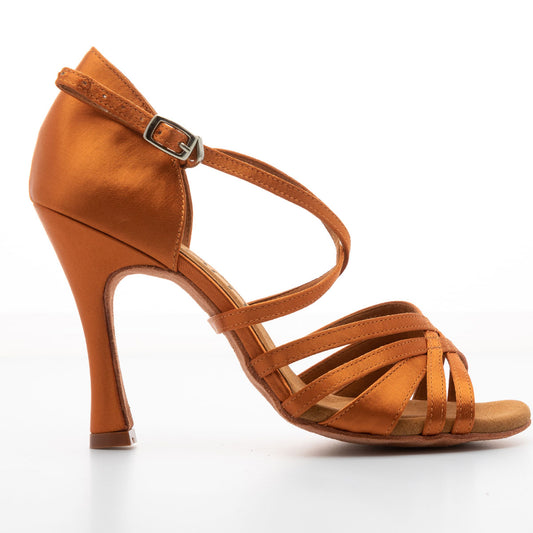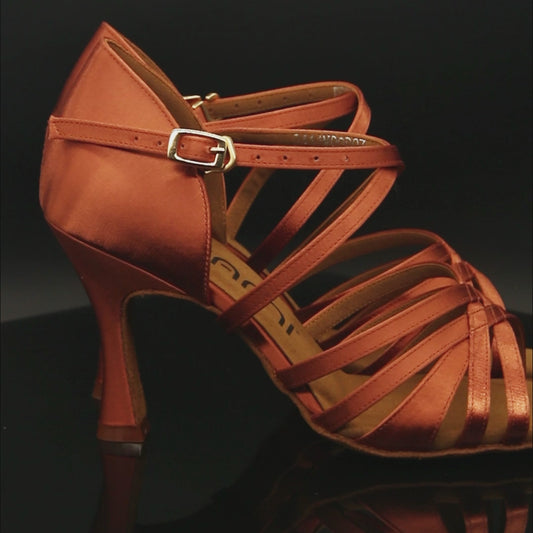

A shoe that looks beautiful at a social is not always the best shoe for repeating turns, shines, body movement, and partner-work patterns for an entire class. The best dance practice shoes should help you train consistently without forcing you to fight the floor, the shoe, or your own feet.
There is no single correct choice for every dancer. A beginner may need a cushioned dance sneaker. A performer must eventually rehearse in the heel she will wear onstage. A leader working on Mambo timing may prefer a flexible Cuban heel or flat.
Your training goal, dance style, floor, fit, and session length should all influence your decision.
What Makes Good Dance Practice Shoes Different?

Good dance practice shoes provide five essentials:
- A secure fit without numbness or sharp pressure
- Predictable pivoting on the actual floor
- Enough flexibility for your dance style
- Appropriate cushioning for repeated movement
- A stable heel or base for your experience level
Repetitive dance movement can place significant pressure on the forefoot. In one study of female flamenco dancers, 80.7% reported metatarsal pain while dancing. That statistic should not be applied directly to Salsa or Bachata dancers, but it illustrates why training footwear deserves serious attention. Research on heeled footwear also consistently finds that forefoot pressure rises as heel height increases.
The goal is not simply to choose the softest shoe. Your practice footwear must also support the movement you are trying to learn.
Dance Practice Shoes Compared
| Shoe type | Best for | Main advantage | Main limitation |
| Dance sneakers | Beginners, long classes, congress workshops | Cushioning and spin-friendly movement | Does not reproduce Latin-heel balance |
| Dance flats or jazz shoes | Footwork, technique drills, low-profile training | Close floor feel and flexibility | Usually less cushioning than sneakers |
| Cuban heels | Salsa, Mambo, leaders, low-heel training | Stable low lift with Latin styling | Requires adjustment from completely flat shoes |
| Low flared Latin heels | Heel technique and performance preparation | Trains realistic heel posture and balance | More forefoot load than flats |
| Street-sole dance shoes | Mixed floors and outdoor practice | Versatility and durability | Feels different from suede indoors |
Dance Sneakers for Long Classes and Workshops

For many dancers, dance sneakers are the most practical starting point. They work especially well for:
- Beginner Salsa and Bachata classes
- Repeated footwork drills
- Choreography sessions
- Daytime congress workshops
- Line dancing
- Shuffle and Hip-Hop
- Long training days involving several classes
The important phrase is dance sneaker. Regular running shoes are designed mainly for forward movement and traction. A dance sneaker should allow controlled pivoting, lateral movement, and forefoot flexibility.
Yami SpinSoles are designed around those movement needs. The current collection features a spin-friendly outsole, subtle upward curvature at the front, and padded insoles. Yami’s product specification identifies unisex sizing from US 5–13, PU-foam insoles, and PU outsoles for the referenced sneaker constructions.
Selected SpinSole G2 models also feature a wider toe box and a thinner, more flexible outsole.
Choose dance sneakers for practice when:
- You are still learning movement patterns.
- Your class includes many repetitions.
- You are attending several workshops in one day.
- You regularly switch between dance styles.
- You want a unisex footwear option.
- You need more cushioning than a traditional flat provides.
Dance sneakers are not the complete answer when your goal is to perform in heels. They can help you build stamina, confidence, and cleaner footwork, but they do not teach your body exactly how to balance or style in a 3-inch or 3.5-inch heel.
Dance Sneakers collection
Why Professional Dancers Own Multiple Pairs of Shoes
Dance Flats and Jazz Shoes for Footwork

Dance flats provide a closer connection to the floor with little or no heel elevation. They can work well for:
- Salsa shines
- Mambo footwork
- Bachata basics
- Technique classes
- Low-profile social dancing
- Leaders or followers who do not want a traditional heel
Yami’s Darios flat uses an adjustable lace-up upper, flexible construction, a very low heel, and a suede outsole intended for smooth dance surfaces. Yami also offers unisex flat and jazz-shoe options for Salsa, Bachata, Kizomba, Merengue, and Zouk.
Dance flats work best when you want clear floor feedback and flexible articulation. Keep suede versions on suitable indoor floors. Sidewalks, water, concrete, and rough surfaces can quickly change or damage the outsole.
A flat may also be a better choice than a sneaker when you want to see and feel exactly how your foot is articulating through the floor. The trade-off is that many flats offer less cushioning than a dance sneaker.
Unisex Dance Flats collection
Street Sole vs. Suede Sole
Cuban Heels for Salsa, Mambo, and Low-Heel Training

A Cuban heel gives you a small amount of elevation while maintaining a broader base than a narrow high heel. It can be an effective middle ground for dancers who want Latin styling without immediately moving into a taller women’s heel.
Yami’s Mambo Flex line uses a chunky Cuban heel, flexible split-sole construction, and suede outsole. The product is designed as a unisex option for Salsa, Mambo, and related Latin styles.
Cuban-heel dance practice shoes may suit:
- Leaders who want a traditional Latin silhouette
- Followers who prefer a low block heel
- Mambo dancers working on articulation
- Dancers transitioning from flats to an elevated shoe
- Performers whose final costume includes a Cuban heel
A Cuban heel can give you more of the posture and weight placement associated with Latin footwear without requiring the balance of a taller heel.
Remember that a suede Cuban-heel shoe is still a specialized indoor dance shoe. The low heel does not automatically make it appropriate for sidewalks or outdoor venues.
Men’s Dance Shoes collection
Mambo Flex product family
Low Flared Latin Heels for Real Heel Technique

Sneakers and flats are excellent training tools, but they cannot completely prepare you to dance or perform in heels.
Heel elevation changes your weight placement and increases forefoot loading. That is why heel training should be introduced progressively rather than avoided until the final rehearsal.
A 2.5-inch or 3-inch flared heel can be a practical training choice because the broader base generally gives you more stability than a narrow stiletto while still allowing you to practice:
- Forward weight placement
- Latin posture
- Leg lines and styling
- Heel-specific balance
- Controlled turns
- Performance transitions
Yami models including Dana ProFlex, Ambar ProFlex, Judy ProFlex, and selected TrueFit shoes are available in lower flared-heel options. The Proflex collection emphasizes forefoot flexibility, while TrueFit focuses on adjustable fit around the toe area.
For performance rehearsals, use a gradual process:
- Learn the choreography in comfortable dance practice shoes.
- Clean the timing, spacing, and formations.
- Introduce your performance heels during shorter rehearsals.
- Gradually increase the time spent in the performance shoes.
- Complete full dress rehearsals in the exact heel and costume before the event.
Your final rehearsal should not be the first time you complete the routine in your stage shoes.
Best Heel Height for Salsa and Bachata
Proflex collection
TrueFit collection
Street-Sole Shoes for Mixed and Outdoor Floors

Restaurants, community centers, patios, festivals, and congress venues may involve several surfaces. A traditional suede sole is not always the best option in those environments.
Yami StreetSoles are designed for mixed-use situations, while SpinSoles provide a sneaker option for suitable indoor and outdoor environments. Yami’s existing surface guide recommends suede for clean wood floors and StreetSoles or SpinSoles for rougher or mixed settings.
Choose street-sole practice dance shoes when:
- The floor is unknown.
- You must walk between indoor and outdoor areas.
- You practice at restaurants or social venues.
- You need more durability than suede.
- You do not want to change shoes between class and the rest of your day.
The trade-off is that a street-friendly outsole will not feel exactly like a traditional suede dance sole. Practice in the outsole you expect to use at the actual event whenever possible.
StreetSoles collection
Floor Types and Shoe Performance
Match Your Practice Shoe to Your Goal

You Are Taking Your First Salsa or Bachata Class
Start with a cushioned dance sneaker or flexible flat. Your priority is learning timing, connection, weight transfer, and basic turns without being distracted by an unstable heel.
Once your fundamentals become more consistent, you can introduce the shoes you want to wear socially.
You Are Preparing for a Social
Practice primarily in comfortable shoes, but spend part of each session in the footwear you plan to wear at the social.
This makes the following details familiar before the event:
- Heel height
- Strap placement
- Toe-box fit
- Outsole response
- Turning resistance
- Overall balance
You Are Training for a Performance
Use a two-stage method:
- Build and clean the choreography in comfortable dance practice shoes.
- Rehearse progressively in the exact heel, costume, and floor conditions used for the performance.
You need enough realistic practice to feel prepared, but that does not mean every early rehearsal must be completed in your highest heel.
You Are Attending a Congress or Festival

Bring two footwear options:
- SpinSoles or another cushioned practice shoe for daytime workshops
- A Latin heel, Cuban heel, or dressier dance shoe for evening socials
Yami’s current shoe-rotation guide recommends a similar strategy: sneakers or practice shoes for workshops, Latin heels for socials and performances, and StreetSoles for travel or mixed environments.
Fit Checklist Before a Full Class
Test new dance practice shoes on a clean surface before committing to a long session.
Your toes should not feel numb or curled. Your heel should remain contained. The forefoot should bend near the natural ball of your foot. During a slow pivot, the outsole should release appropriately for the floor.
Check both feet because one may be longer, wider, or higher-volume. Fit the more demanding foot first, then use laces or straps to refine the fit on the smaller side.
How Should Dance Shoes Fit?
Five Practice-Shoe Mistakes to Avoid
1. Training Only in Running Shoes
A heavily treaded outsole may make pivots feel restricted. Use footwear designed for the movement and surface whenever possible.
2. Practicing Only in Sneakers When You Perform in Heels
Sneakers can build stamina, but performance-specific balance must also be rehearsed.
3. Wearing Suede Outside
Rough surfaces can damage suede and change the way the outsole behaves.
4. Choosing Softness Over Stability
The softest shoe is not automatically the most secure or appropriate shoe.
5. Using One Pair for Every Floor and Purpose
Different floors, session lengths, and training goals often require different footwear.
A Simple Two-Pair Practice Strategy
Most social dancers can begin with two pairs:
- Pair one: A cushioned dance sneaker or flexible flat for classes, drills, and workshops.
- Pair two: The shoe worn socially or onstage for shorter practice under realistic conditions.
This gives you comfort without separating your training completely from the way you actually dance.
Frequently Asked Questions
Can I use ordinary sneakers for Salsa or Bachata practice?
You can learn basic steps in them, but a highly grippy outsole may make repeated turns difficult. Dance-specific sneakers are usually more suitable for pivot-heavy training.
Are dance sneakers better than heels for practice?
Sneakers are often better for beginners and long sessions. Heels become necessary when your goal includes heel technique, styling, social-dance preparation, or performance.
What heel height should I practice in?
Use the lowest stable height that supports your current goal. Gradually include the exact heel you will wear socially or onstage.
Should practice shoes have suede or a street sole?
Choose suede for a compatible clean indoor floor. Choose a street-friendly outsole for mixed, outdoor, or unpredictable surfaces.
Do leaders and followers need different practice shoes?
Not necessarily. Your movement goal, fit, floor, and preferred heel profile matter more than the role label.
Build a Practice Rotation That Supports Your Dancing
The best dance practice shoes match what you are training, where you are training, and how long you will be moving.
Use SpinSoles for cushioned, spin-friendly workshops. Choose flexible flats for close floor feel. Use Cuban heels for low-profile Latin technique. Add lower flared heels for realistic heel training. Choose StreetSoles when the environment moves beyond a clean indoor dance floor.
Explore Yami’s full range of dance sneakers, flats, Cuban heels, StreetSoles, Proflex heels, and TrueFit styles to build a practice rotation that supports your feet, your technique, and the dancer you are becoming.
Dance Sneakers collection
Unisex Dance Flats collection
Latin Dance Shoes collection
StreetSoles collection