
I used to think I had “problem feet.”
Some nights my dance shoes felt perfect.
Other nights — the same shoes — felt tight, unforgiving, and impossible by the third hour.
So I blamed my feet.
- Too wide.
- Too sensitive.
- Too swollen.
 Photo Credit: XLfeet Website
But after years of salsa socials, bachata marathons, congress weekends, and rehearsals in heels, I realized something important:
It wasn’t my feet. It was the fit. And more specifically — it was the lack of adaptability.
If you’ve searched:
- “dance shoes wide vs narrow”
- “dance shoes for swollen feet”
- “do dance shoes stretch?”
You’re not alone. These are some of the most common questions dancers ask — because width alone doesn’t solve the real issue.
Let’s talk about what’s actually happening.
Why Width Isn’t the Real Problem
Most dance shoes are made on one standard shape.

You’re expected to:
- Either fit it
- Or “break it in”
- Or hope it stretches
- Or just tolerate it
But here’s what dancers know that manufacturers often ignore:
Your feet change throughout the night.
- They warm up.
- They expand.
- They shift forward in heels.
- They swell after hours of movement.
A shoe that feels “perfect” at 9PM may feel restrictive by midnight.
That doesn’t mean you bought the wrong size.
It means you bought a shoe that doesn’t adapt.
Wide vs Narrow Dance Shoes: How to Tell What You Need
Let’s break this down honestly.
You may need a wider fit if:
- Your toes feel cramped or numb
- You have bunions or a wide forefoot
- You feel pressure across the ball of your foot
- You can’t wait to take your shoes off after one set
- You may need a narrower or more secure fit if:
- Your foot slides forward when spinning
- Your heel lifts out of the shoe
- You feel unstable during turns
- You constantly tighten your straps
But here’s the truth most dancers discover:
Your foot may feel narrow at the start of the night and wide by the end.
So which one are you?
Probably both — depending on the hour.
Do Dance Shoes Stretch? (Yes — But Not the Way You Think)

Short answer: Yes, dance shoes stretch.
But not infinitely — and not always in the way dancers expect.
Most dance shoes are made from materials like:
- Satin
- Soft synthetic leather
- PU (polyurethane)
- Suede uppers
- Mesh linings
These materials are designed to:
- Soften with body heat
- Mold slightly to your foot
- Relax in high-pressure areas over time
So yes — after a few wears, your shoes may feel more comfortable than they did out of the box.
But here’s the important part:
Dance shoes are not made from elastic or highly stretchable materials.
They’re structured for:
- Stability during spins
- Secure weight transfer
- Controlled flexibility
That means stretch is:
- Limited
- Gradual
- Dependent on where pressure is applied
For example:
- A satin upper may give slightly across the forefoot.
- A synthetic leather toe box may soften but won’t dramatically widen.
- Straps may mold to your foot shape but won’t lengthen significantly.
- And stretching does not solve swelling during a single night.
Stretch happens over multiple wears.
Swelling happens in real time.
That’s the difference.
If a shoe feels painfully tight when you try it on, it’s unlikely to magically transform into a wide-fit shoe later.
What stretching really does is:
- Fine-tune comfort
- Ease pressure points slightly
- Allow the material to conform to your unique foot shape
- But it doesn’t replace proper fit — and it doesn’t replace adjustability.
- Stretch should be the finishing touch — not the solution.
Why Your Feet Swell When You Dance (And Why This Is Normal)
This is something I wish someone told me years ago.
Your feet swell because:
- Blood flow increases when you move
- Heat builds up
- Gravity shifts weight forward in heels
- Muscles fatigue and need space
Swelling is not a flaw.
It’s your body doing what it’s supposed to do after hours of dancing.
The real issue is wearing shoes that don’t account for it.
Dance Shoes for Swollen Feet: What Actually Helps
 Photo Credit: Care Plus Foot & Ankle Specialists
When your feet swell, you need:
- Room to breathe
- Adjustable tension
- Secure support without squeezing
What doesn’t help:
- Fixed straps
- Rigid toe boxes
- Shoes that only feel good in a showroom
This is where adaptable dance shoes change everything.
Adjustable Dance Shoes: Why One Fit Doesn’t Work All Night
The biggest shift in my own dancing happened when I stopped looking for “wide” or “narrow” and started looking for adjustable.

Because adjustable means:
- I can tighten early in the night for stability.
- I can loosen slightly later when my feet expand.
- I can customize tension across my forefoot.
- I don’t have to choose between security and comfort.
Shoes that adapt let you stay focused on your partner — not your pain.
Why Adaptability Is Stronger Than Width
Competitors talk about:
Wide fit. Narrow fit. But adaptability is smarter.
Because:
- Width is static.
- Your feet are dynamic.
Adaptability respects how dancers actually dance:
- For hours.
- Across different floors.
- Through different energy levels.
- With different partners.
It’s not about “fixing” your feet. It’s about supporting them as they move.
When You Fall Between Sizes (The Most Common Scenario)
So many dancers tell me:
- “I’m between sizes.”
- “I’m wide in the front but narrow in the heel.”
- “My right foot is slightly bigger.”
You’re not unusual. You’re normal.
Shoes that allow micro-adjustments across the toe box and straps make this difference feel effortless.
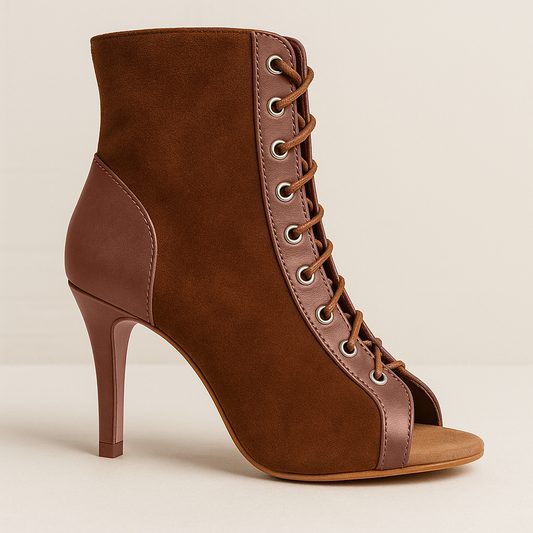
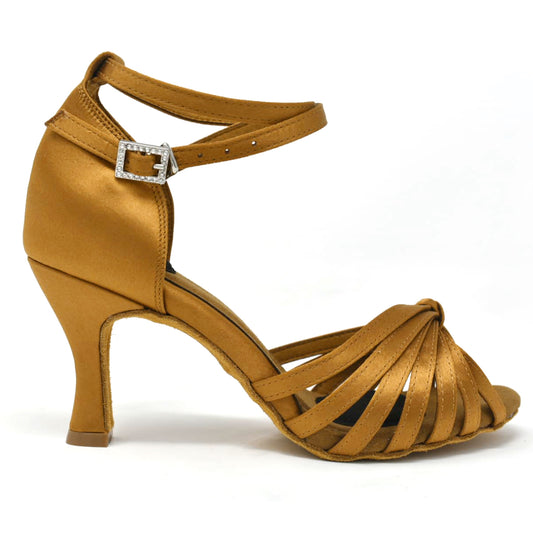
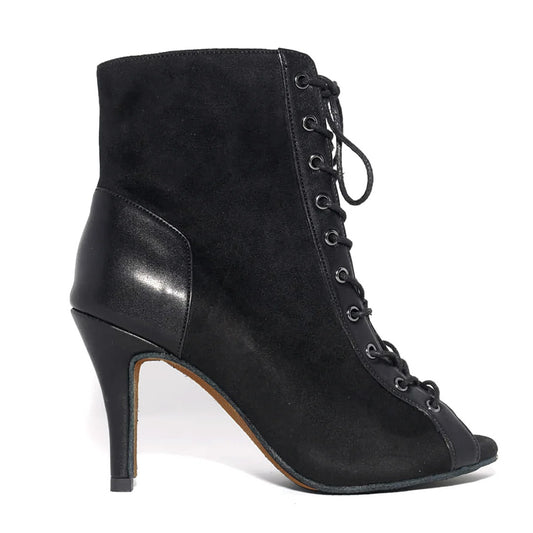
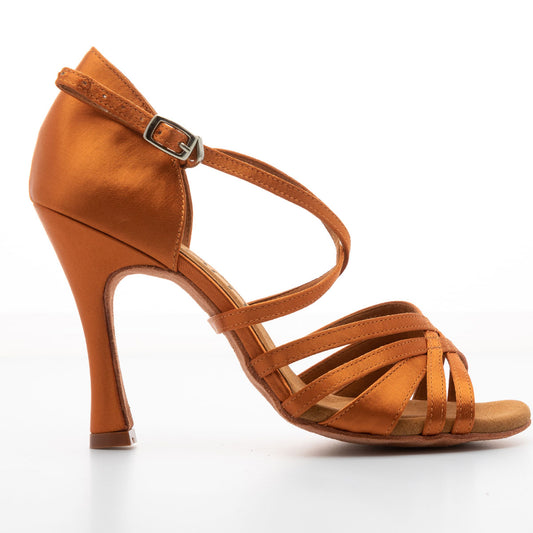
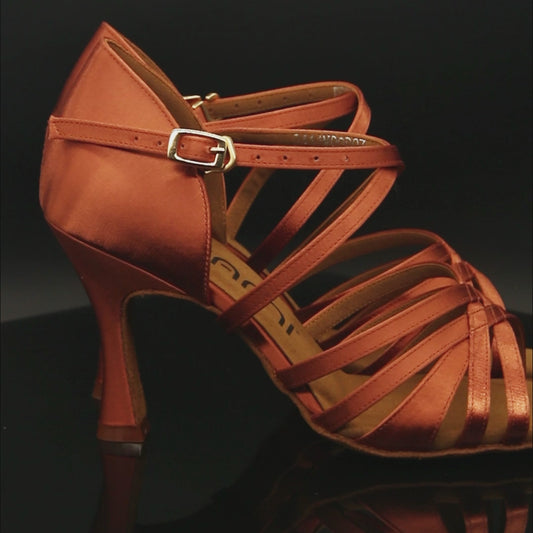
That’s why adaptable styles like Lesly, Yuiza, and Isabella exist.
Not because dancers are picky. But because real feet don’t fit into rigid molds.
How the Right Fit Changes Your Entire Night

When your shoes fit correctly:
- Your posture improves.
- Your balance feels natural.
- Your spins feel lighter.
- You stop counting songs.
- You stay longer.
Comfort builds confidence.
Confidence builds freedom.
And freedom is why we dance.
How Understanding Fit Reduces Returns (And Regret)
As dancers, we’ve all experienced ordering a pair that:
- Felt snug at home
- Felt tight at the social
- Made us second-guess our choice
When you understand how dance shoes should fit — and how feet behave over time — you buy smarter.
You don’t panic when they feel secure at first. You know what to expect. And you choose adaptability instead of guessing at width.
The Real Question Isn’t “Wide or Narrow?”
The better question is:
Will this shoe adapt with me?
Because your feet:
- Warm up
- Expand
- Shift
- Fatigue
- Recover
Shoes should move with you — not against you.
Final Thoughts (From One Dancer to Another)
If you’ve ever blamed your feet, stop. They’re doing their job. The right dance shoes aren’t just about width.
They’re about adaptability — especially if you dance for hours, travel to events, or refuse to leave before the last song.
You deserve shoes that respect how you actually dance.
If you’re exploring adjustable options, look for designs that allow you to fine-tune your fit — so your shoes feel as confident as you do on the floor.
Because dancing should be unforgettable for the music — not the discomfort.